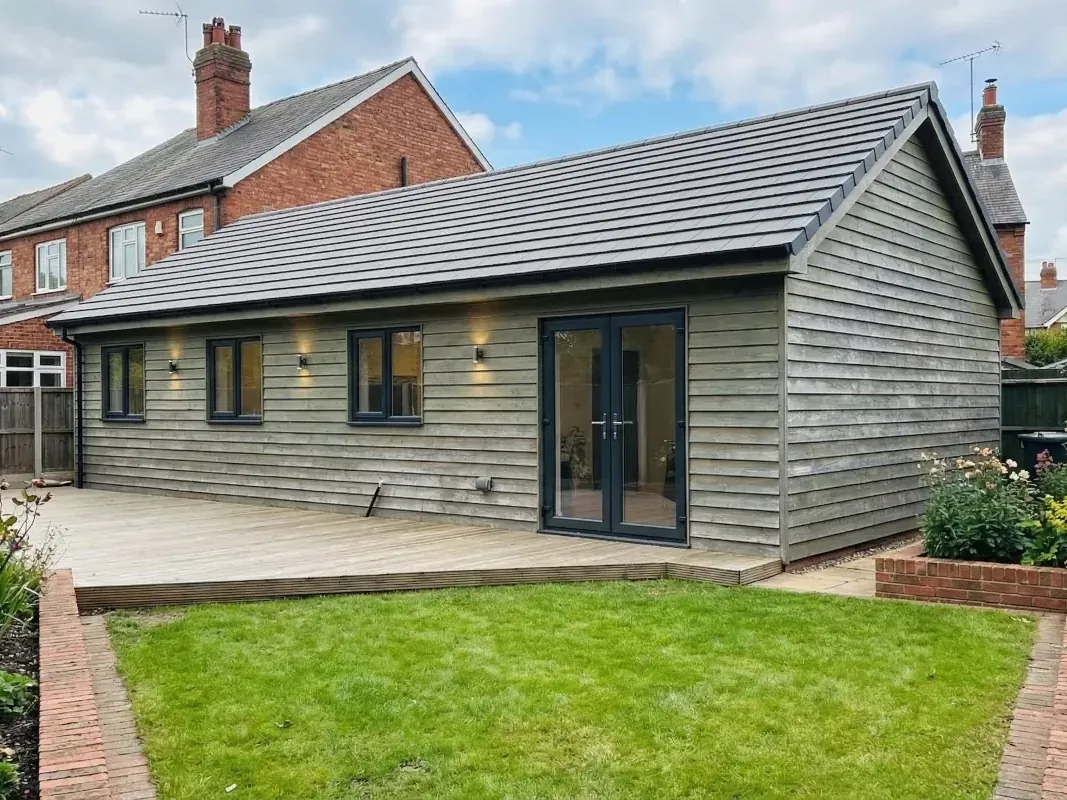
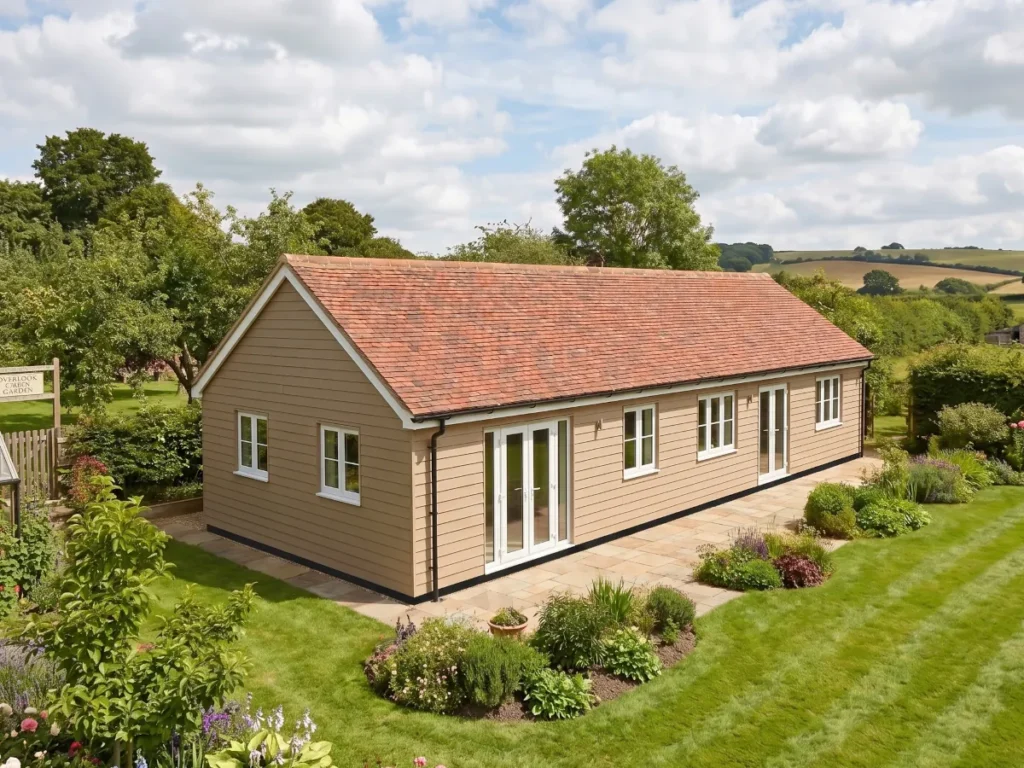
When families first start looking into building a luxury garden home, they often brace themselves for a long, drawn-out battle with the local planning department. However, thanks to a specific piece of UK legislation, you may be able to site an annexe without full planning permission. This “loophole” is known as the Caravan Act.
If you are looking for an alternative to care homes for an elderly parent or a way to bring your family closer together, understanding the Caravan Act can save you months of stress. Here is the Caravan Act explained simply, and how Artisan Annexe uses it to deliver your dream garden home.
What is the Caravan Sites and Control of Development Act?
In the UK, the planning laws that govern permanent brick-and-mortar extensions are very strict. However, the Caravan Sites and Control of Development Act 1960 (and the subsequent Caravan Sites Act 1968) sets out completely different rules for “mobile homes.”
Under UK planning law, placing a mobile home within the “curtilage” (the garden or grounds) of your main house does not constitute “development” as long as certain strict criteria are met. Because it is not classed as a development, you do not need standard householder planning permission.
But do not worry—you do not have to put a plastic static caravan in your garden! At Artisan Annexe, our bespoke luxury lodges are engineered using premium timber and insulation, but they are technically and legally constructed to meet the government’s exact definition of a caravan.
The Legal Definition of a “Caravan” (The 3 Key Tests)
To qualify under the Caravan Act and bypass full planning permission, an Artisan Annexe must pass three strict legal tests set out by the government:
- The Size Test: The structure must not exceed specific dimensions. The maximum legal size is 20 metres long, 6.8 metres wide, and an internal ceiling height of no more than 3.05 metres. (This gives you plenty of space for a spacious 2-bedroom luxury home!)
- The Construction Test: The annexe must be constructed in a way that it is capable of being transported. It cannot be built permanently into a foundation like a brick house. It must be capable of being lifted and moved in no more than two sections.
The Mobility Test: It must be theoretically possible to move the structure once it has been assembled. We use specialised, non-permanent foundational systems (like ground screws or concrete plinths) to ensure the annexe remains legally “mobile.”
The “Incidental Use” Rule for Garden Annexes
Meeting the construction criteria is only half the battle. To site an annexe without full planning under the Caravan Act, you must also pass the “Use Test.”
The annexe must be used in a way that is “incidental to the enjoyment of the main dwelling house.” In plain English, this means the person living in the annexe must be a family member (like an elderly parent or adult child) who still maintains a relationship with the main house.
For example, the annexe resident might eat dinner in the main house a few times a week, use the main house’s utility room, or simply rely on the main house for support and care. If you plan to rent the annexe out to a stranger or run it as a separate holiday let, the incidental use rule is broken, and you will need full planning permission.
Applying for a Certificate of Lawfulness
Even if your garden home perfectly fits the Caravan Act criteria, we strongly advise against simply building it without telling the council. If a neighbour complains, you could face stressful legal questions.
Instead, the correct procedure is to apply for a Certificate of Lawfulness for a Proposed Use or Development (LDC).
During our £2,500 Planning and Design stage, the expert team at Artisan Annexe will submit this application to your local authority on your behalf. We provide the council with our architectural drawings, a structural breakdown, and a legal argument proving your build complies with the Caravan Act. The council then issues a legally binding certificate confirming your right to build, giving you total peace of mind before manufacturing begins.
Frequently Asked Questions About the Caravan Act
Does an Artisan Annexe feel like a caravan?
Absolutely not. Our annexes are built to residential standards using premium timber frames, high-grade insulation, and beautiful exterior cladding (like Cedar or composite). They look and feel like luxury modern homes; their “caravan” status is purely a legal and structural classification.
Does the Caravan Act apply in Scotland and Wales?
While the definition of a caravan is the same across Great Britain, local planning policies differ. Scottish local authorities, in particular, are much stricter and often require full planning permission regardless of the Caravan Act. Our surveyors will advise you on the exact rules for your local area.
Are there building regulations under the Caravan Act?
Because the annexe is legally a mobile home, it is generally exempt from standard permanent-dwelling Building Regulations. However, at Artisan Annexe, we still build our structures to meet or exceed residential insulation and structural standards to guarantee a warm, safe, and luxurious living environment.
Can I get a mortgage on a Caravan Act annexe?
Because the structure is not permanently attached to the land, standard high-street mortgages are usually not applicable. Most of our clients fund their annexes through savings, the sale of their existing property when moving into a family member’s garden, equity release from the main property, or specialist financing.
Ready to start your annexe journey? Contact Artisan Annexe today to book your free site survey and discover how we can help you navigate the planning process effortlessly.